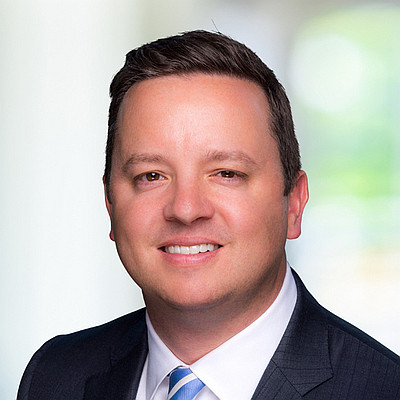
Photo of Andrew Gibson

Andrew Gibson helps his clients build successful projects and negotiate and resolve disputes. As a partner in Stoel Rives’ Real Estate, Construction and Design practice, Andrew is experienced in drafting and negotiating all forms of project documents, from the design phase through construction, and regularly  assists clients with navigating the typical tricks and traps of contracting and insurance coverage issues. He is also a veteran of a variety of legal proceedings and has successfully pursued construction defect claims, insurance and bond claims, bid protests, stop payment notices, mechanic’s liens, real estate disputes, and collection actions through mediation, arbitration, and litigation.

Click here for Andrew Gibson's full bio.

In response to COVID-19, construction projects in California are currently subject to a statewide Executive Order and potentially other similar (or dissimilar) “stay home” or “shelter in place” orders or directives issued by counties and cities. Under the California statewide order, only businesses needed to maintain continuity of operations of identified federal critical infrastructure sectors (click here for the list) may continue to operate. Construction is not identified as a separate “critical infrastructure sector,” but many construction projects fall under the umbrellas of other sectors, such as “critical manufacturing,” “energy,” “healthcare,” and “commercial facilities.” The California State Public Health Officer also designated the following “essential workforce” members of relevance to the construction industry (this is not an exhaustive list):

  • “Construction Workers who support the construction, operation, inspection, and maintenance of construction sites and construction projects (including housing construction)”
  • “Workers such as plumbers, electricians, exterminators, and other service providers who provide services that are necessary to maintaining the safety, sanitation, construction material sources, and essential operation of construction sites and construction projects (including those that support such projects to ensure the availability of needed facilities, transportation, energy and communications; and support to ensure the effective removal, storage, and disposal of solid waste and hazardous waste)”

One challenge somewhat unique to owners and contractors is that the applicable orders are generally directed at identifying “essential businesses” or “critical businesses,” while owners and contractors may have a mix of projects—with some likely essential (such as construction of a hospital), others likely not (such as construction of a nightclub), and many falling in a grey area in between. When analyzing “grey area” projects it is recommended to focus on the traits of the particular project rather than attempt to understand whether your business—which may include a range of projects—can generally continue to operate.

Negotiating construction contract language in 2017 can have important consequences years into the future. The obligations and rights arising from one often overlooked clause, that addressing contractual “third-party beneficiaries,” i.e. “a person or entity who, though not a party to the contract, stands to benefit from the contract’s performance,”  can vary considerably from state to…

Many building developers utilize a single purpose entity limited liability company (an “LLC”) to purchase and develop property, such as an apartment complex, a subdivision, or a shopping center. Generally, an LLC’s debts, whether incurred or judicially imposed, belong only to the LLC, not to its members.  However, an LLC’s individual member may be subject to personal liability under the doctrine of alter ego liability if (1) the individual and the LLC share a unity of interest and ownership such that the separate personalities of the two no longer exist, and (2) treating the debts as the LLC’s alone would impose an inequitable result that rewards the bad faith of the individual.  A recent legal decision from Southern California highlights the dangers of disregarding an LLC’s corporate formalities during any construction project.

Carrying adequate insurance on construction projects is a critical aspect of risk management for developers, builders and designers. But it’s a complicated and time-consuming subject, and if you haven’t slogged through the complexity of the details in policies, you may be vulnerable to unintended consequences. In my recent article for the Daily Journal of Commerce…

Oregon’s law on statutes of limitation and/or repose periods on construction claims is complex and ever-changing.  A recent Oregon Supreme Court ruling has introduced yet another instance of differing time limits on construction defect claims. In my recent article for the Daily Journal of Commerce, I discuss Schell v. The Schollander Companies, Inc. and …

Subcontractor default is a construction project nightmare that can result in significant additional costs and delay completion of the project. But there are two chief options to protect against such risks — performance bonds and subcontractor default insurance.  In my recent article for the Daily Journal of Commerce, I outline the unique characteristics of …

Complex construction projects carry complex problems as they approach completion. In my recent article for the Daily Journal of Commerce, I address 10 potential pitfalls that owners, contractors and design professionals may encounter, and I offer tips to help you prepare for them.

Read the full article here.

“Finishing Strong vs. Finishing Wrong:…

In my recent article “Put in Writing When the Clock Starts Ticking,” I discuss how varying intrepretations statue of limitations can affect your business. Setting your own time limits on claims in your construction contracts can help you manage risk.

Read the full article here.

“Put in Writing When the Clock Starts Ticking” was…